Top accounting courses for small business in the UK
Accounting Courses for Small Business – Managing your business finances can feel overwhelming, but the right training makes all the difference. From understanding VAT and payroll to mastering bookkeeping software, a solid grasp of accounting is non-negotiable for sustainable growth. Many UK founders and small business owners delay this crucial step, leading to stressful tax seasons and missed financial opportunities.
This guide demystifies the options by breaking down the best accounting courses for small business owners in the UK. We get straight to the point, helping you find practical, actionable training that fits your budget, schedule, and specific needs. Whether you’re a complete beginner needing to learn the fundamentals or looking to master software like Xero or QuickBooks, this curated roundup is for you.
We have reviewed each platform to provide a clear overview, complete with direct links, so you can easily compare your options. We will explore courses covering everything from basic bookkeeping principles to UK-specific tax compliance, ensuring you find the perfect fit. Let’s find the course that will give you complete control over your numbers and empower you to make smarter, more confident business decisions.
1. Association of Accounting Technicians (AAT)
For small business owners seeking structured, reputable training from a recognised UK professional body, the Association of Accounting Technicians (AAT) is an excellent starting point. AAT offers a range of short courses specifically designed for non-accountants, blending foundational knowledge with practical, UK-specific compliance topics. This makes it one of the best sources for accounting courses for small business owners who need to get to grips with the essentials quickly and authoritatively.
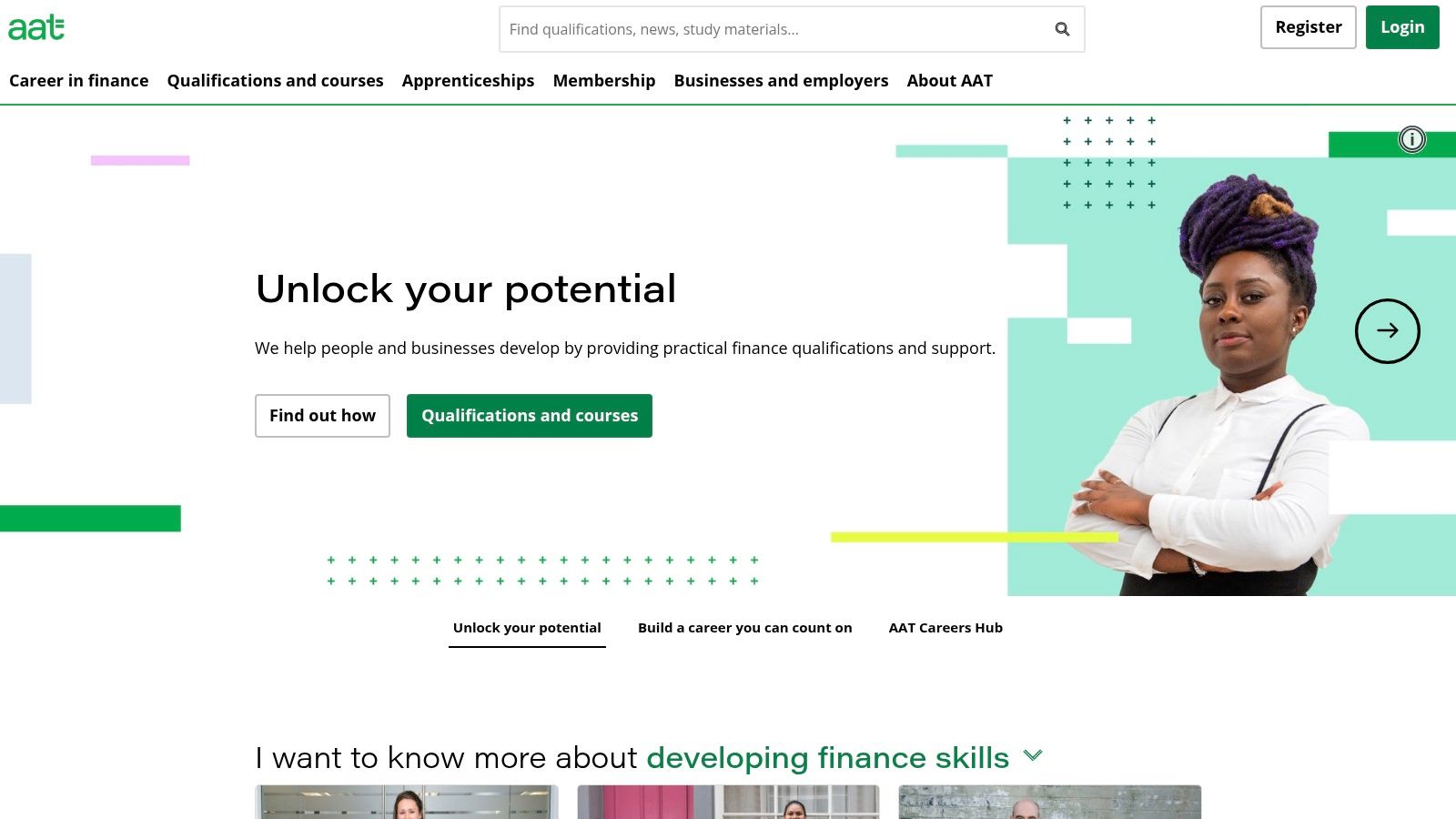
Unlike generic online platforms, AAT’s training is deeply rooted in UK accounting standards and practices. Their courses provide a clear pathway from basic principles to more complex areas like VAT returns and financial controls, ensuring the content is directly applicable to running a UK-based enterprise.
Key Offerings and Features
AAT’s training is split into two primary formats: AAT Essentials live online workshops and Business Finance Basics self-paced modules.
- AAT Essentials: These are intensive, expert-led courses delivered live online over one or two days. The “Bookkeeping (AAT Essentials)” course is particularly valuable, offering practical examples of how to apply double-entry bookkeeping. For instance, you’ll learn exactly how to record a sales invoice (debiting accounts receivable, crediting revenue) and a supplier bill (debiting an expense, crediting accounts payable), ensuring your trial balance actually balances. It also covers crucial topics like cash versus accrual accounting and understanding financial controls to prevent fraud.
- Business Finance Basics: For those needing a more flexible or introductory option, AAT provides low-cost, bite-sized e-learning modules. Topics like “The Basics of Bookkeeping” can be completed in a few hours, offering a focused learning experience with time-limited access (typically 90 days).
Actionable Insight: After completing the AAT Essentials Bookkeeping course, immediately create a simple chart of accounts for your business. List all your income streams (e.g., “Consulting Services,” “Product Sales”) and common expenses (e.g., “Software Subscriptions,” “Office Supplies,” “Marketing Spend”). This structure will make your day-to-day bookkeeping far more organised.
Pricing and Access
The cost structure reflects the different delivery methods. The comprehensive live online courses, such as the two-day Bookkeeping workshop, are priced higher, reflecting the direct interaction with expert tutors. In contrast, the self-paced Business Finance Basics modules are significantly more affordable, making them an accessible entry point for foundational knowledge.
| Course Type | Format | Pros | Cons |
|---|---|---|---|
| AAT Essentials | Live Online Workshop | Expert-led, interactive, deep dive into topics | Higher cost, runs on fixed dates |
| Business Finance Basics | Self-Paced E-learning | Low cost, flexible, focused modules | Less comprehensive, limited tutor support |
Website: https://www.aat.org.uk
2. HMRC (GOV.UK)
For authoritative, no-cost guidance direct from the source, HMRC’s online resources are an essential supplement to any formal training. While not a traditional course provider, HMRC offers a wealth of free webinars, videos, and articles covering crucial UK tax and compliance topics. This makes it an invaluable resource for small business owners looking to complement their learning and ensure their practices align perfectly with UK law, reinforcing what they learn in other accounting courses for small business.
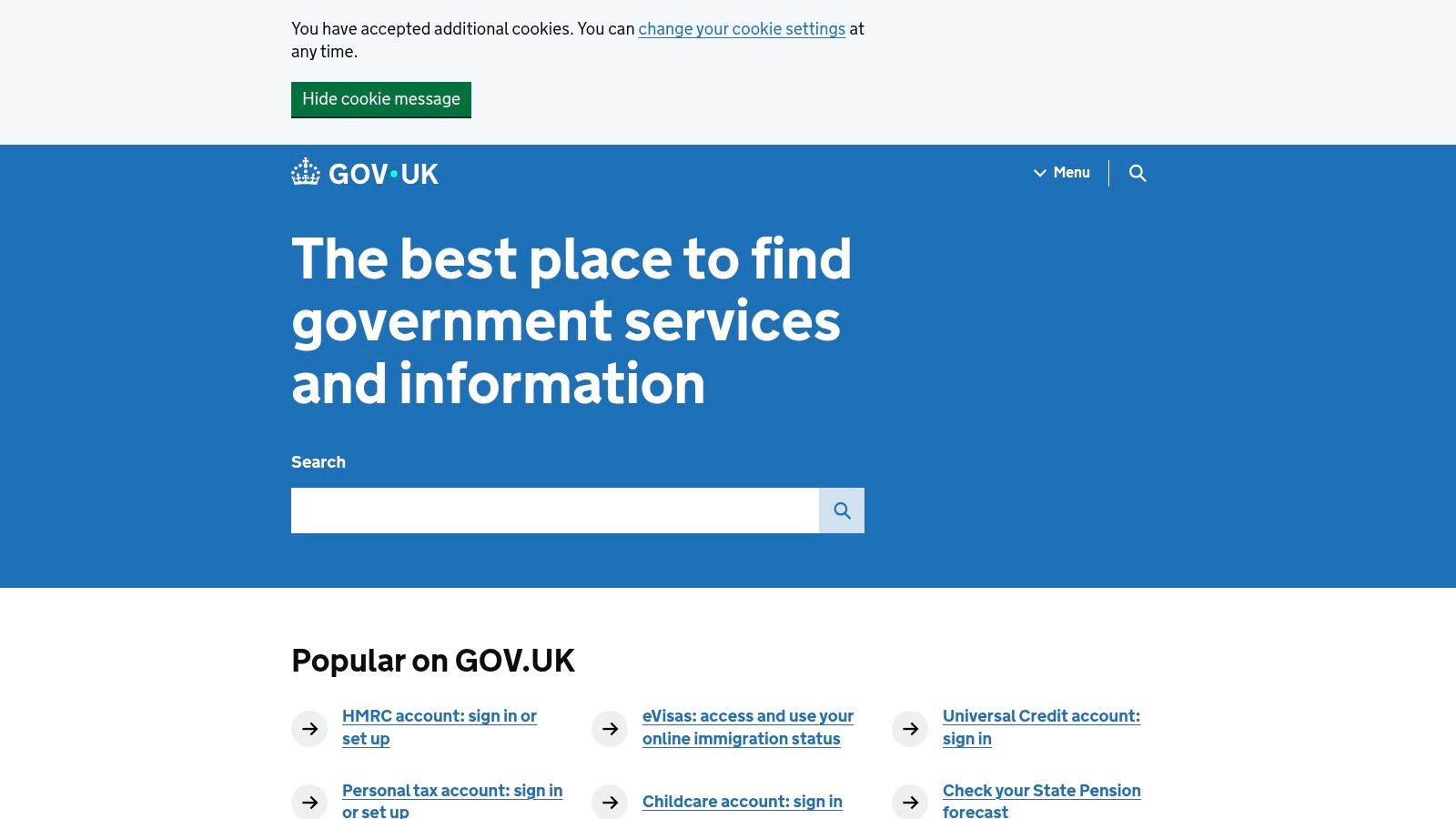
Unlike paid courses that teach the “how-to” of accounting, HMRC’s content focuses specifically on the “what-to-do” for compliance. This official guidance is ideal for clarifying complex areas like VAT schemes, understanding your obligations under Making Tax Digital (MTD), or getting to grips with employer responsibilities.
Key Offerings and Features
HMRC’s learning materials are delivered through the GOV.UK website, primarily as live and recorded webinars and detailed written guides.
- Live and On-Demand Webinars: HMRC regularly hosts live webinars on specific subjects like “VAT – an introduction,” “Making Tax Digital for VAT,” and payroll basics. These sessions often include a Q&A segment, allowing you to ask questions directly. For example, a webinar on expenses will clarify exactly what counts as an “allowable expense,” such as whether you can claim a portion of your home internet bill if you work from home.
- YouTube Channel: The HMRC YouTube channel offers bite-sized videos that explain complex topics in a simple, accessible format. This is perfect for quick refreshers on topics such as completing your first online VAT return or understanding record-keeping rules.
- Comprehensive Guides: Beyond videos, the GOV.UK site provides extensive written guidance on almost every aspect of business tax. For example, if you’re newly self-employed, their detailed content on registering for self-assessment is the definitive guide. You can learn more about registering for Self Assessment tax here.
Actionable Insight: Use HMRC’s resources to create a compliance calendar. After watching a webinar on Self Assessment, note down the key deadlines: 5th October to register, 31st January for online filing, and 31st July for the second payment on account. Add these to your business calendar with reminders to avoid penalties.
Pricing and Access
All of HMRC’s webinars, videos, and guides are completely free to access. Registration for live webinars is required but comes at no cost. This makes it an incredibly cost-effective way to stay up-to-date with UK tax legislation directly from the regulator.
| Course Type | Format | Pros | Cons |
|---|---|---|---|
| Webinars & Videos | Live & On-Demand Online | Free, direct from the regulator, highly reliable for UK rules | Not a full course, focuses only on compliance |
| Written Guides | Online Articles | Comprehensive, always accessible, covers niche topics | Can be dense and difficult to navigate |
Website: https://www.gov.uk
3. FutureLearn
For business owners who value learning from established academic and professional bodies but want the flexibility of an online platform, FutureLearn is an ideal choice. It hosts a diverse range of bookkeeping and finance courses from reputable UK partners like The Open University and Kaplan, as well as AAT-endorsed microcredentials. This makes it a strong contender for high-quality, UK-aligned accounting courses for small business that fit a flexible schedule.

Unlike platforms that create their own content, FutureLearn acts as a host for courses developed by experts in their fields. This ensures the material is both academically sound and professionally relevant, offering a structured learning path with clear time commitments, often broken down into a few hours per week over several weeks.
Key Offerings and Features
FutureLearn provides a blend of free access and paid upgrades, allowing you to sample courses before committing financially.
- University and Professional Body Courses: You can access courses such as “Bookkeeping for Personal and Business Accounting” from The Open University. These programmes are designed for beginners and cover foundational concepts like financial statements, VAT, and managing cash flow, with clear weekly learning goals. For example, one week might focus entirely on creating a cash flow forecast, guiding you through estimating your future sales income and fixed costs to predict potential shortfalls.
- AAT-Endorsed Microcredentials: For more intensive training, FutureLearn offers AAT-endorsed tracks. These are more comprehensive than a single short course and provide a verified credential upon completion, adding significant weight to your learning.
- Flexible Access Model: Most courses can be audited for free for a limited time, giving you access to the learning materials. A paid upgrade provides extended access and a digital certificate, while an Unlimited subscription offers access to a wide range of courses.
Actionable Insight: Use the free audit option to review the first week or two of a course. This allows you to assess the content’s relevance and the instructor’s teaching style before deciding to purchase an upgrade for a certificate or long-term access. For a bookkeeping course, see if the initial lessons on debits and credits click with you before committing.
Pricing and Access
The platform’s tiered pricing model offers excellent flexibility. You can learn the essentials for free if you don’t require a certificate. Paid upgrades for individual short courses provide a certificate and longer access, while the Unlimited subscription is a cost-effective option for those planning to take multiple courses. For more details on what a FutureLearn course entails, you can learn more about their accounting and finance programmes online.
| Course Type | Format | Pros | Cons |
|---|---|---|---|
| Short Courses | Self-Paced E-learning | Reputable UK partners, free audit option | Start dates can be fixed, limited access on free tier |
| Microcredentials | Self-Paced E-learning | AAT-endorsed, in-depth curriculum | Higher cost than a single short course |
Website: https://www.futurelearn.com
4. Reed Courses
For small business owners who value variety, flexibility, and affordability, Reed Courses acts as a vast online marketplace. It aggregates hundreds of training options from various providers, making it a powerful tool for finding highly specific or budget-friendly accounting courses for small business. This platform is ideal for self-starters who want to browse and compare a wide range of self-paced, often CPD-accredited, courses in one place.
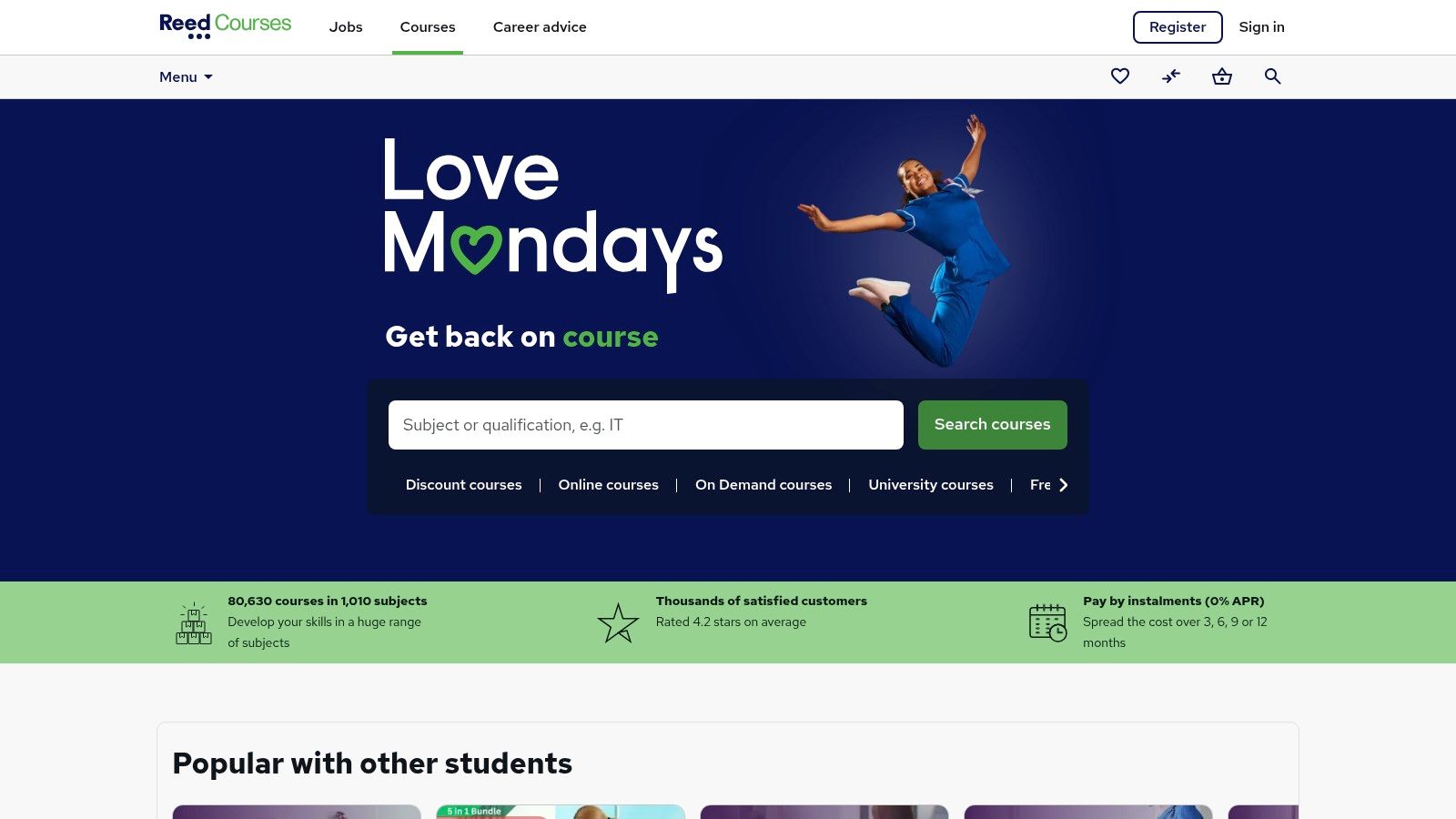
Unlike single-provider platforms, Reed’s strength lies in its sheer volume and competitive pricing. You can find everything from comprehensive small business accounting diplomas to niche modules on UK VAT, payroll, or the Construction Industry Scheme (CIS), often at heavily discounted rates. This allows you to plug specific knowledge gaps without committing to a lengthy or expensive programme.
Key Offerings and Features
Reed’s catalogue is extensive, so using its filters is key to finding the right course. Most listings provide clear details on price, duration, CPD hours, and any included certificates.
- Wide Range of Topics: The platform excels in variety. For example, a freelance web developer could find a specific, low-cost course on “Accounting for Digital Creatives” that covers how to handle project-based income and software subscriptions as expenses.
- Detailed Course Information: Each course page typically includes a curriculum outline, provider details, student reviews, and a Q&A section. This helps you assess the quality and relevance of a course before purchasing.
- Frequent Discounts: The marketplace model encourages competitive pricing, with providers often running significant promotions. This makes it a go-to for low-cost, high-value learning opportunities.
Actionable Insight: Use Reed’s filters to find a course that matches a very specific problem you’re facing right now. For example, if you’ve just hired your first employee, search for “small business payroll introduction UK” to find a short, affordable course that walks you through setting up PAYE and understanding national insurance contributions.
Pricing and Access
Pricing on Reed is one of its main attractions, with many self-paced online courses available for a low one-off fee, often under £20 during a sale. Access is typically instant upon purchase, with materials available online for a set period or for life, depending on the provider. This makes it an extremely accessible entry point for business owners on a tight budget.
| Course Type | Format | Pros | Cons |
|---|---|---|---|
| Marketplace Courses | Self-Paced E-learning | Very affordable entry pricing; frequent deals, Topic breadth lets you target specific gaps | Quality varies by provider; buyer diligence is needed, Some courses may use non-UK examples; must verify UK focus |
Website: https://www.reed.co.uk/courses
5. QuickBooks UK
For the millions of small businesses that already rely on QuickBooks for their bookkeeping, the most direct training path is often through the software provider itself. QuickBooks UK provides a wealth of official product training, including free onboarding, webinars, and tutorials designed to get users proficient quickly. This makes it an essential resource for accounting courses for small business owners who are committed to this specific software ecosystem.
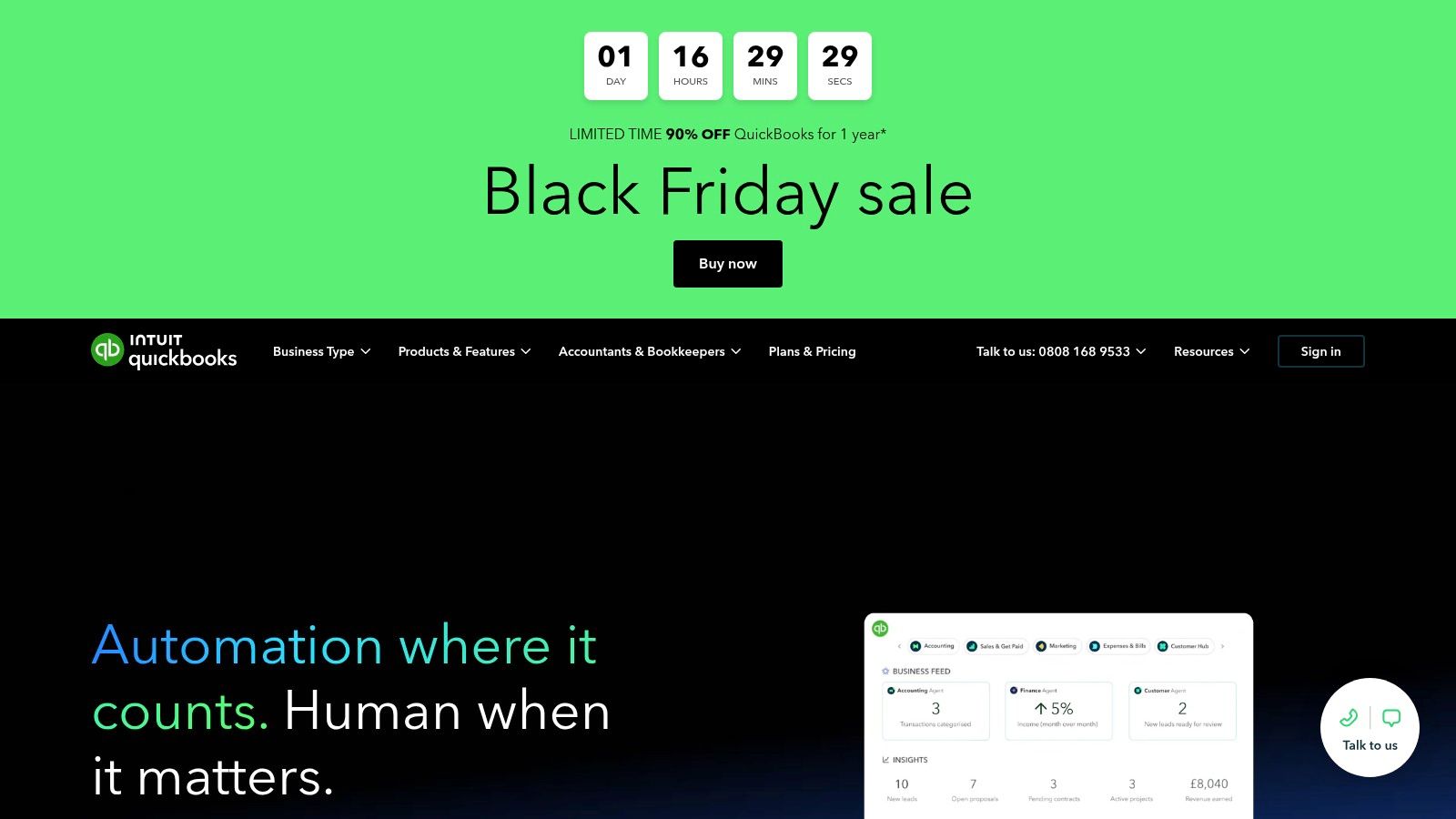
Unlike platform-agnostic courses, QuickBooks’ training is tailored to its own interface and workflows. This ensures every lesson is immediately applicable, showing you exactly which buttons to press and which reports to run to manage your finances effectively. The content is also specifically geared towards UK compliance, with dedicated guidance on Making Tax Digital (MTD) for VAT, which is crucial for keeping accurate accounts.
Key Offerings and Features
QuickBooks UK structures its learning resources around direct software application, moving from initial setup to advanced reporting.
- Free Onboarding Session: New customers can access a free 45-minute live session with a QuickBooks expert. This covers essential day-to-day tasks. For example, they’ll show you exactly how to connect your business bank account so transactions feed in automatically, and then how to create ‘rules’ to categorise recurring payments like your phone bill or coffee shop expenses.
- Live and On-Demand Webinars: The platform hosts regular webinars on topics relevant to small businesses, such as cash flow management or preparing for tax season, all demonstrated within the QuickBooks environment.
- Self-Serve Video Tutorials: A comprehensive and searchable library of short video tutorials and help articles allows users to find quick answers to specific problems as they arise.
- Community Support: Users can tap into a community forum to ask questions and share solutions with other QuickBooks users and product specialists.
Actionable Insight: Use the free onboarding session to address your most pressing setup questions. Prepare a list beforehand covering your specific business needs, such as “How do I correctly record a customer deposit for a future project?” or “What’s the best way to track mileage for business travel?”.
Pricing and Access
Much of the training content is included free with a QuickBooks software subscription or even during a free trial period. This makes it a highly cost-effective way to master the software you are already paying for. The onboarding sessions, webinars, and help library are generally available at no extra cost, removing financial barriers to learning.
| Course Type | Format | Pros | Cons |
|---|---|---|---|
| Official Training | Onboarding, Webinars, Tutorials | Low or no-cost training, UK-specific MTD guidance | Content is software-specific, not a general accounting syllabus |
| Self-Serve Support | Videos, Community Forum | Instantly accessible, solves specific problems | Lacks structured learning path, less focus on accounting theory |
Website: https://quickbooks.intuit.com/uk
6. Xero UK
For small business owners already using or considering Xero accounting software, tapping into their direct UK-based educational resources is a highly effective strategy. Xero provides a mix of free in-person events, online webinars, and guides tailored specifically to its platform. This makes it an ideal choice for accounting courses for small business owners who want to maximise the return on their software investment and learn directly from the source.
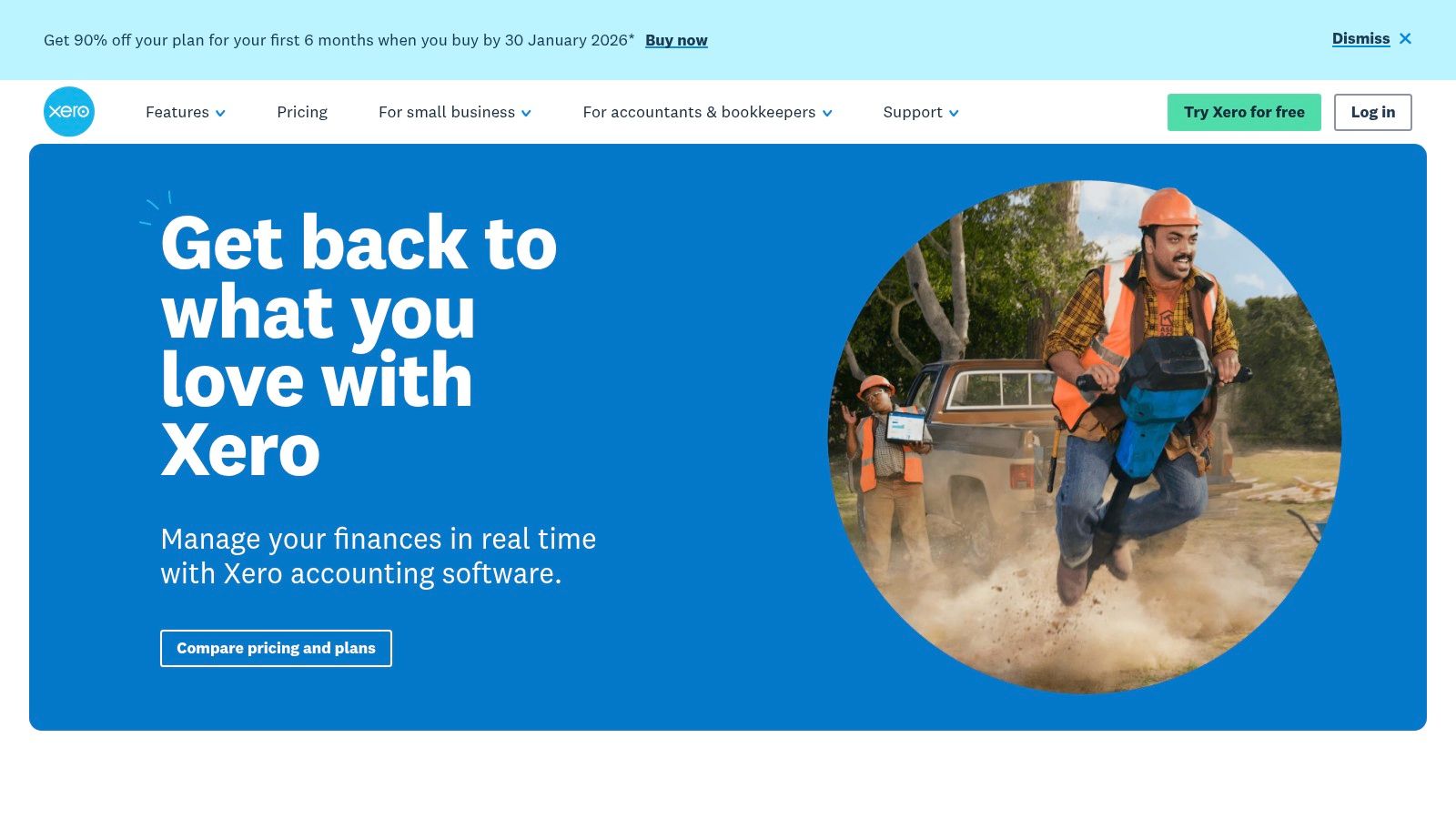
Unlike generic courses, Xero’s training is built around practical, time-saving workflows within its own ecosystem. The learning is designed to solve real-world problems UK businesses face, from navigating Making Tax Digital for Income Tax Self Assessment (MTD for ITSA) to improving day-to-day cash flow management using the software’s features.
Key Offerings and Features
Xero’s educational content is delivered through a blend of live events and self-serve online resources, catering to different learning preferences.
- Small Business Sessions: These are free, half-day, in-person events (often part of a “Roadshow”) held across the UK. They offer practical sessions on topics like cash flow mastery. A typical session might show a real-world example of a small construction company using Xero’s reporting to see which projects are most profitable and identify where material costs are rising.
- Online Learning & Programmes: Xero provides a wealth of online resources, including detailed guides and dedicated programmes like “Mastering your cash flow.” These self-paced materials help business owners understand financial concepts and immediately apply them within the Xero platform.
- Networking and App Partners: A significant benefit of their in-person events is the opportunity for peer networking and connecting with Xero’s app partners. This allows you to discover third-party tools that can integrate with your accounting software to streamline operations further.
Actionable Insight: At a Xero in-person event, make a point to speak with an app partner who solves a specific pain point for your business. For example, if you run an e-commerce store, find the inventory management partner and ask them to demonstrate how their tool syncs stock levels with Xero to avoid manual data entry.
Pricing and Access
Most of Xero’s educational resources, including their in-person sessions and online guides, are offered for free to the small business community. The primary requirement is an interest in or usage of the Xero platform. This makes it an incredibly cost-effective way to gain practical, software-specific accounting knowledge.
| Course Type | Format | Pros | Cons |
|---|---|---|---|
| Small Business Sessions | In-Person Event | Free expert-led training, peer networking | Limited places, tied to specific dates/locations |
| Online Programmes | Self-Paced E-learning | Flexible, free, directly applicable to Xero | Learning is tied to the Xero product ecosystem |
Website: https://www.xero.com/uk
7. OpenLearn (The Open University)
For small business owners seeking a risk-free entry into the world of finance, OpenLearn from The Open University provides university-quality courses at zero cost. Its flagship offering, “Introduction to bookkeeping and accounting,” is a perfect primer for anyone needing to grasp the fundamental concepts without any financial commitment. This makes it an invaluable resource for entrepreneurs who want to test the waters before investing in more comprehensive accounting courses for small business.
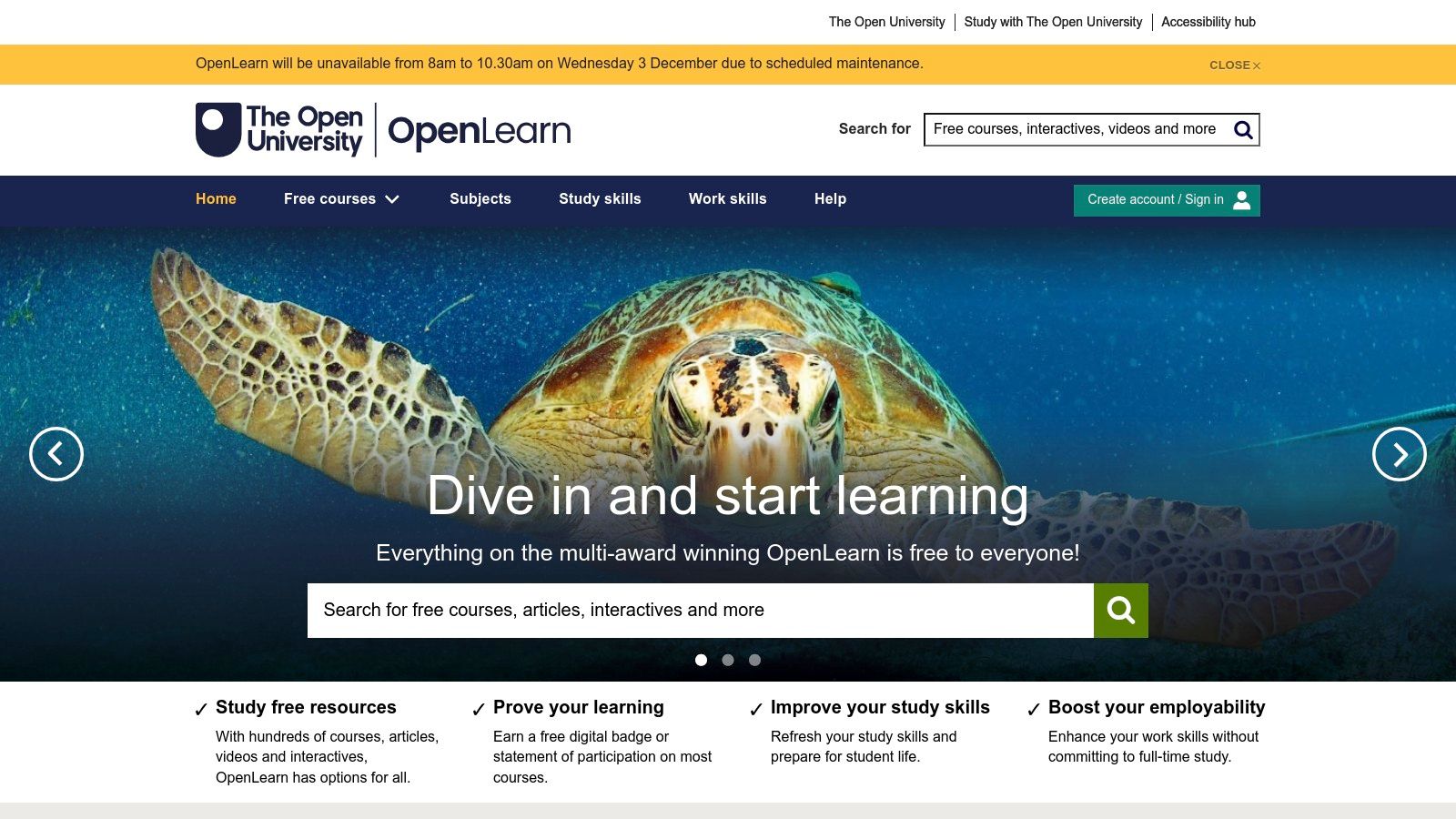
Unlike paid platforms, OpenLearn’s mission is purely educational. The materials are derived from The Open University’s curriculum, ensuring a high standard of concept-first teaching. It provides the “why” behind accounting principles, giving you a solid theoretical base before you tackle the practical, software-specific tasks of running your business finances.
Key Offerings and Features
The platform’s strength lies in its accessible, self-paced modules that cover the building blocks of financial literacy.
- Comprehensive Foundational Course: The “Introduction to bookkeeping and accounting” course is the standout offering. It guides learners through core principles using a case study, for instance showing how a fictional small shop would record its daily sales, purchase of new stock, and payment of rent, and then how these transactions flow through to the final financial statements.
- Flexible and Free Access: All course materials are available immediately without a paywall. You can study at your own pace and revisit modules as needed. Upon completion, you can claim a free Statement of Participation by creating an account, which serves as evidence of your learning.
Actionable Insight: As you work through the course, apply the concepts to your own business on a piece of paper or a simple spreadsheet. When the course explains how to create a balance sheet, draft one for your business. List your assets (cash in bank, equipment) and liabilities (loans, money owed to suppliers) to get a real-time financial snapshot.
Pricing and Access
OpenLearn is completely free. There are no fees for accessing the courses, viewing the materials, or receiving the Statement of Participation. This makes it an exceptional, no-pressure starting point for any small business owner, allowing you to build foundational knowledge without any upfront investment.
| Course Type | Format | Pros | Cons |
|---|---|---|---|
| Introductory Courses | Self-Paced E-learning | Zero cost, university-quality content, great primer before paid courses | No tutor support, not UK tax-specific, no formal qualification |
Website: https://www.open.edu/openlearn
Top 7 Small-Business Accounting Course Comparison
| Provider | Implementation complexity | Resource requirements | Expected outcomes | Ideal use cases | Key advantages |
|---|---|---|---|---|---|
| Association of Accounting Technicians (AAT) | Low–Medium — scheduled live sessions plus self-study | Paid live course or low-cost micro-modules; internet; set session dates | Practical bookkeeping, VAT basics, fraud/controls; employer-recognised training | Non-accountants and small business teams needing UK-focused practical skills | Trusted awarding body; blended practical + compliance content |
| HMRC (GOV.UK) | Low — watch webinars or recordings on demand | Free; internet; no vendor materials or certification | Official, up-to-date VAT/MTD and record-keeping guidance | Sole traders and micro‑SMEs needing regulator guidance | Authoritative, free, regulator-sourced compliance information |
| FutureLearn | Low — self-paced or cohort-based with occasional start dates | Free audit or paid upgrade/subscription; internet; weekly time commitment | Structured course learning with optional digital certificates; UK-aligned content | Learners wanting university-backed courses with flexible access | Reputable partners (Open University/AAT); audit-first flexibility |
| Reed Courses | Low — marketplace purchase and instant access | Low-cost deals often available; internet; variable provider quality | Targeted skills, CPD hours or short certificates depending on course | Budget learners filling specific topic gaps quickly | Large course breadth; frequent discounts and immediate access |
| QuickBooks UK | Low — product-specific onboarding and tutorials | Often included with software subscription/trial; internet; QuickBooks account | Platform-specific proficiency, invoicing, expenses, MTD VAT setup | Small businesses using QuickBooks seeking workflow training | Free/low-cost product training; practical, software-centred guidance |
| Xero UK | Low–Medium — events plus online programmes and product trials | Free events or trial; internet; possible travel for in-person sessions | Xero workflow skills, cash-flow management, MTD guidance; networking | Xero users wanting practical sessions and partner access | Events with Q&A and networking; UK-focused practical tips |
| OpenLearn (The Open University) | Low — fully self-paced study | Free; internet; no tutor support; optional account for statement | University-quality bookkeeping fundamentals; optional Statement of Participation | Beginners seeking a free, concept-first primer before paid training | Zero cost; high-quality academic materials without paywall |
From Learning to Doing: Your Next Steps in Financial Management
You have now explored a comprehensive range of accounting courses for small business owners in the UK, from the formal, accredited pathways offered by the Association of Accounting Technicians (AAT) to the free, practical webinars provided by HMRC. We’ve covered everything from foundational bookkeeping principles on FutureLearn and OpenLearn to specific software mastery with QuickBooks and Xero. The key takeaway is that financial literacy is not a luxury for entrepreneurs; it is a fundamental pillar of sustainable growth.
Investing your time in one of these courses is the first critical step. The next, and arguably more important, is transforming that knowledge into consistent, daily action. Financial management is not a one-off task but a continuous cycle of recording, reviewing, and refining. The real power comes when you move from simply learning about cash flow statements to actively using them to make strategic decisions for your business.
Turning Knowledge into Actionable Habits
To bridge the gap between learning and doing, focus on creating solid financial habits. Start by implementing one key practice from your chosen course immediately. For instance, if you’ve just completed a Xero tutorial, dedicate 15 minutes every morning to reconciling bank transactions. If you’ve taken an HMRC VAT course, create a digital folder system to save every relevant receipt the moment you receive it.
Small, consistent actions build momentum and prevent financial admin from becoming an overwhelming burden. This disciplined approach ensures that your newfound skills become an integrated part of your business operations, rather than a forgotten certificate. It’s this practical application that turns educational investment into tangible business value, providing the clarity needed to spot opportunities and mitigate risks.
Choosing Your Path and Building Your Foundation
Selecting the right course ultimately depends on your immediate needs and long-term goals.
- For long-term credibility and in-depth knowledge, a structured qualification from AAT is unparalleled.
- For mastering the software you use daily, the official training from QuickBooks or Xero is the most efficient choice.
- For grasping the essentials of tax and compliance without cost, the resources from HMRC and OpenLearn offer incredible value.
Regardless of the path you choose, remember that effective financial management relies on a solid business structure. Keeping your business and personal finances separate, maintaining accurate records, and ensuring you meet all legal filing deadlines are non-negotiable. This is where having a robust operational framework becomes essential, allowing you to focus on growth while your compliance and administrative foundations are secure.
Ready to build that solid foundation? Acorn Business Solutions provides the essential services, like a Registered Office Address and efficient mail handling, that ensure your business is compliant and professionally presented from day one. Let us handle the administrative framework so you can focus on applying your new accounting skills to drive your business forward.
Related Topics

Professional Indemnity Insurance
Discover what is professional indemnity insurance, why your business needs it, and how it shields you from costly client claims.

What is a company secretary
Moving home? Learn how do you redirect your mail with Royal Mail or private services. A practical guide to costs, setup,

How Do You Redirect Your Mail in the UK?
Moving home? Learn how do you redirect your mail with Royal Mail or private services. A practical guide to costs, setup,

UK Business Bank Accounts With No credit Checks
Discover UK business bank accounts with no credit checks. This guide explains your options and eligibility

Managing cash flow for small business: Quick tips
Discover managing cash flow for small business with practical steps to forecast, optimize liquidity,
Your Guide to the company unique tax reference number
Discover what the company unique tax reference number is, why you need it, and how to locate yours quickly.